
C H A P T E R
N ° 58
The Water Sector and Mitigation Measures
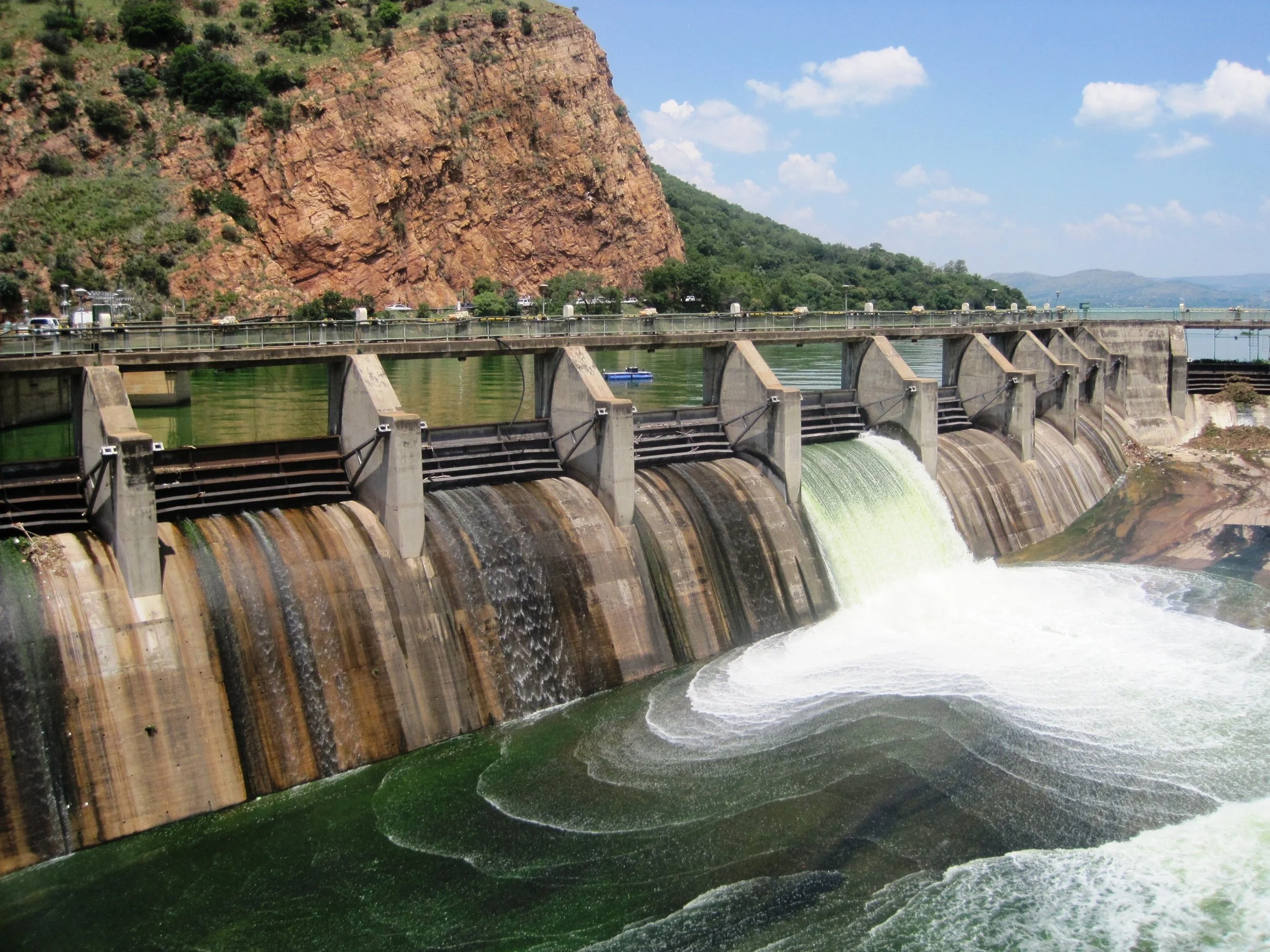
Image Credit: Lynn Greyling / Pixabay.
When we think of threats to the global water supply, we rarely look to the stars. However, as the water sector rapidly shifts toward advanced terrestrial digitization and automated controls, it opens the door to a new and complex cosmic variable: space weather.
The intersection of advanced terrestrial digitization and severe space weather represents an immediate, structural challenge for the global water sector.
As municipal utilities and private engineering firms increasingly anchor their operations in automated supervisory control and data acquisition (SCADA) controls, expand their long metal pipeline networks, and rely on continuous electrical power grid stability, the sector's systemic risk profile fundamentally shifts.
Space weather can no longer be viewed as a peripheral hazard confined to aerospace engineering or satellite operations. Instead, it must be recognized as an active operational variable that directly impacts public health, corporate governance, and regional disaster risk reduction (DRR).
Addressing these complex vulnerabilities requires a proactive shift from reactive management to systemic resilience.
For the water sector, this demands a coordinated, multi-layered approach to mitigation.
In today’s article, we will, therefore, look closer at the relation between space weather and the water sector, and discuss how to mitigation against the impact from this natural hazard.
The Water Sector
The water sector is the entire socio-economic and environmental ecosystem responsible for managing water resources, providing safe drinking water, treating wastewater, and protecting communities from water-related hazards.
Unlike a traditional commercial industry that only focuses on selling a product, the water sector is defined by a “dual mandate”: it functions simultaneously as a critical public service (i.e., human right/environmental health) and a massive infrastructure industry (i.e., engineering/utilities).
Space Weather
“Space weather” refers to the dynamic and changing environmental conditions in the space surrounding Earth, driven entirely by the Sun. It is caused by solar activity, such as solar flares, coronal mass ejections (CMEs), and high-speed streams of solar wind (HSS). These solar events release massive bursts of radiation, intense magnetic fields, and highly charged atomic particles into the Solar System. When this solar material travels through space and collides with Earth, it interacts heavily with the planet's magnetic field and upper atmosphere. While often invisible, this interaction is the direct physical cause of the Northern and Southern Lights.
Mitigation measures
Addressing the complex vulnerabilities of the water sector requires a proactive shift from reactive management to systemic resilience.
For the water sector, this demands a coordinated, multi-layered approach to mitigation incapsulating: Technical and structural hardening; Operational redundancy and continuity, and; Risk management and Critical Infrastructure (CI) cooperation.
Technical and structural hardening
Technical and structural hardening of water utility infrastructure against space weather phenomena requires robust physical and electrotechnical defense mechanisms.
When geomagnetically induced currents (GICs) and telluric surges occur during solar storms, they drive direct current (DC) into grounded metallic structures. Water pipelines are highly vulnerable because their cathodic protection (CP) systems—which normally counteract corrosion through a controlled electrical potential—can be overwhelmed or mispolarized, rapidly accelerating galvanic corrosion. To mitigate this risk, utilities must integrate secondary voltage safety nets, such as solid-state decouplers and surge arresters, which absorb these transient currents and stabilize the protective electrochemical potential during geomagnetic disturbances.
Simultaneously, the monitoring and control systems governing water distribution must be shielded from solar-induced anomalies. Automated networks, specifically Supervisory Control and Data Acquisition (SCADA) systems, rely heavily on sensitive microelectronics that are prone to data corruption, component latch-ups, or power supply failure during intense magnetic fluctuations. Implementing decentralized data backups, galvanically isolated communication lines, and hardware redundancies—such as backup control units stored in shielded enclosures—ensures that operational visibility and control are maintained. This dual-layered strategy prevents a single space weather event from triggering cascading infrastructure failures across the distribution network.
Operational redundancy and continuity
Operational redundancy and continuity within the water sector require a comprehensive mitigation framework that addresses cross-sector interdependencies, as water distribution relies heavily on the external electrical grid and telecommunications networks.
During cascading power grid blackouts—whether triggered by extreme weather, cyberattacks, or solar storms—the loss of primary electrical energy can paralyze high-powered distribution pumps and halt water flow entirely. To guarantee uninterrupted service, utilities must build robust off-grid backup generation systems capable of handling the high inductive starting currents demanded by large pumps. Furthermore, integrating localized, purely mechanical or analog fail-safes—such as hydro-pneumatic surge tanks and weight-loaded, self-actuating valves—ensures that basic hydraulic pressure can be maintained in the distribution network without any electrical power or external system commands.
Simultaneously, modern water operations face significant vulnerabilities due to their reliance on satellite communications and Global Navigation Satellite Systems (GNSS) for remote data transmission and precision time-stamping in Supervisory Control and Data Acquisition (SCADA) networks. If these communication links drop, organizations must immediately pivot to predefined analog continuity protocols and manual operating procedures. This requires decentralized operational capability, enabling field technicians to physically monitor and regulate flow and pressure levels directly at localized pumping stations and treatment facilities. By pairing autonomous off-grid energy sources with decoupled, manual control workflows, water utilities can sustain critical public health infrastructure even when the surrounding society's digital and electrical grids collapse.
Risk management and Critical Infrastructure (CI) cooperation
Risk management and critical infrastructure (CI) cooperation within the water sector demands an integrated approach to threat intelligence, as national security frameworks increasingly classify water resources as a primary, high-risk critical dependency.
Because the operational integrity of water systems depends on cross-sector stability, risk managers must formalize partnerships with national space weather agencies to integrate real-time geomagnetic telemetry into their existing Emergency Management Frameworks (EMFs). By monitoring solar activity indices—such as the planetary K-index (Kp) or regional telluric field variants—utilities can establish automated early warning action protocols. These protocols act as operational triggers, allowing managers to proactively decouple sensitive Supervisory Control and Data Acquisition (SCADA) networks, top off storage reservoirs, or transition to localized power generation before a geomagnetic storm reaches peak intensity.
To bridge the gap between theoretical risk assessment and actual operational resilience, water authorities must institute mandatory operational readiness audits specifically tailored to systemic tail-risks. Traditional hazard frameworks often overlook low-frequency, high-consequence events like severe solar storms, leaving utilities exposed to catastrophic cascading failures. Regulatory audits compel water providers to rigorously test their physical hardening measures, evaluate manual continuity protocols, and verify the interoperability of emergency communication systems under complete grid-down scenarios. Incorporating these space weather stress tests into long-term safety plans ensures that infrastructure investments are legally aligned with national resilience standards, effectively transforming unpredictable space weather vulnerabilities into a quantifiable, manageable operational risk.
Future outlook
Securing municipal water utilities against the systemic threat of space weather requires a unified approach that bridges physical engineering, operational adaptability, and strategic institutional cooperation. Technical hardening of pipelines and Supervisory Control and Data Acquisition (SCADA) systems forms the vital first line of physical defense against geomagnetically induced currents (GICs) and electromagnetic anomalies.
However, because the water sector remains inseparably linked to external electrical and digital grids, physical protection must be reinforced by robust operational redundancy, including autonomous off-grid power systems and analog fail-safes.
Ultimately, these physical and operational strategies can only succeed if they are embedded within a proactive risk management framework that leverages real-time solar telemetry and mandatory readiness audits. By integrating these three pillars into long-term infrastructure planning, water resource managers can transform unpredictable space weather vulnerabilities into a quantifiable, highly resilient operational model, ensuring the continuous supply of safe water during severe global infrastructure disruptions.
The first step towards space weather resilience?: Recognize space weather as an active operational reality in order to allow the water sector to safeguard critical infrastructure (CI) and maintain water cycle stability.
Source
Boteler, D. H. (2000). Geomagnetic hazards to conducting networks. Natural Hazards, 23(2), 291-320.
Boin, A., & McConkey, D. (2007). Making critical infrastructure resilient: The role of risk management and crisis governance. Journal of Contingencies and Crisis Management, 15(1), 47-53.
Chang, S. E., Seligson, H. A., & Eguchi, R. T. (2007). Estimation of the economic impacts of water system disruptions after earthquakes. Earthquake Spectra, 23(1), 53-71.
Gummow, R. A. (2002). GIC effects on pipeline corrosion and CP systems. IEEE Transactions on Power Delivery, 17(4), 921-927.
Luiijf, E., Nieuwenhuijs, A. H., & Klaver, M. (2003). Empirical findings on critical infrastructure dependencies in Europe. In International Workshop on Critical Infrastructure Protection (pp. 56-68). Springer, Berlin, Heidelberg.
McDaniels, T., Chang, S., Cole, K., Mikawoz, J., & Longstaff, H. (2007). Fostering resilience to extreme events within infrastructure systems: Characterizing infrastructure relationships for mitigation and recovery. Global Environmental Change, 17(2), 175-190.
Mote, C. W., Tolbert, R. J., & Klinger, B. A. (2014). Integrating space weather threat mitigation into emergency action plans for municipal water utilities. Journal of Infrastructure Systems, 20(4), 04014022.
Radasky, W. A. (2014). Protection of critical infrastructure from high-altitude electromagnetic pulse (HEMP) and geomagnetic disturbance (GMD). IEEE Electromagnetic Compatibility Magazine, 3(3), 61-66.
Rinaldi, S. M., Peerenboom, J. P., & Kelly, T. K. (2001). Identifying, understanding, and analyzing critical infrastructure interdependencies. IEEE Control Systems Magazine, 21(6), 11-25.
