
C H A P T E R
N ° 51
The Banking Sector (Part 2)
Space weather poses significant systemic risks to the financial sector through infrastructure disruption and behavioral impacts on trading. Extreme events can trigger global economic losses, with Lloyds of London estimating scenarios of up to $2.4 trillion.
The banking sector (sub-sector) is the foundational service industry that manages money, credit, and financial transactions for individuals, businesses, and governments within the financial sector. Its core function is to take deposits and channel these funds into loans and investments, fueling economic growth and market stability.
In today’s article, we will look closer at the relation between space weather and the banking sector. This article is part 2 and, thus, the last of 2 articles focused on this topic. Combined the articles will explore the effects of space weather on physical infrastructure (systemic volatility) used within the banking sector, as well as behavioral psychology and sentiment (market returns).
In this article;C H A P T E R N ° 51 The Banking Sector (Part 2), we will look closer at the behavioral psychology and sentiment (Market returns), provide a future outlook on space weather and its effects on the banking sector, and discuss the complexity of mitigation measures.
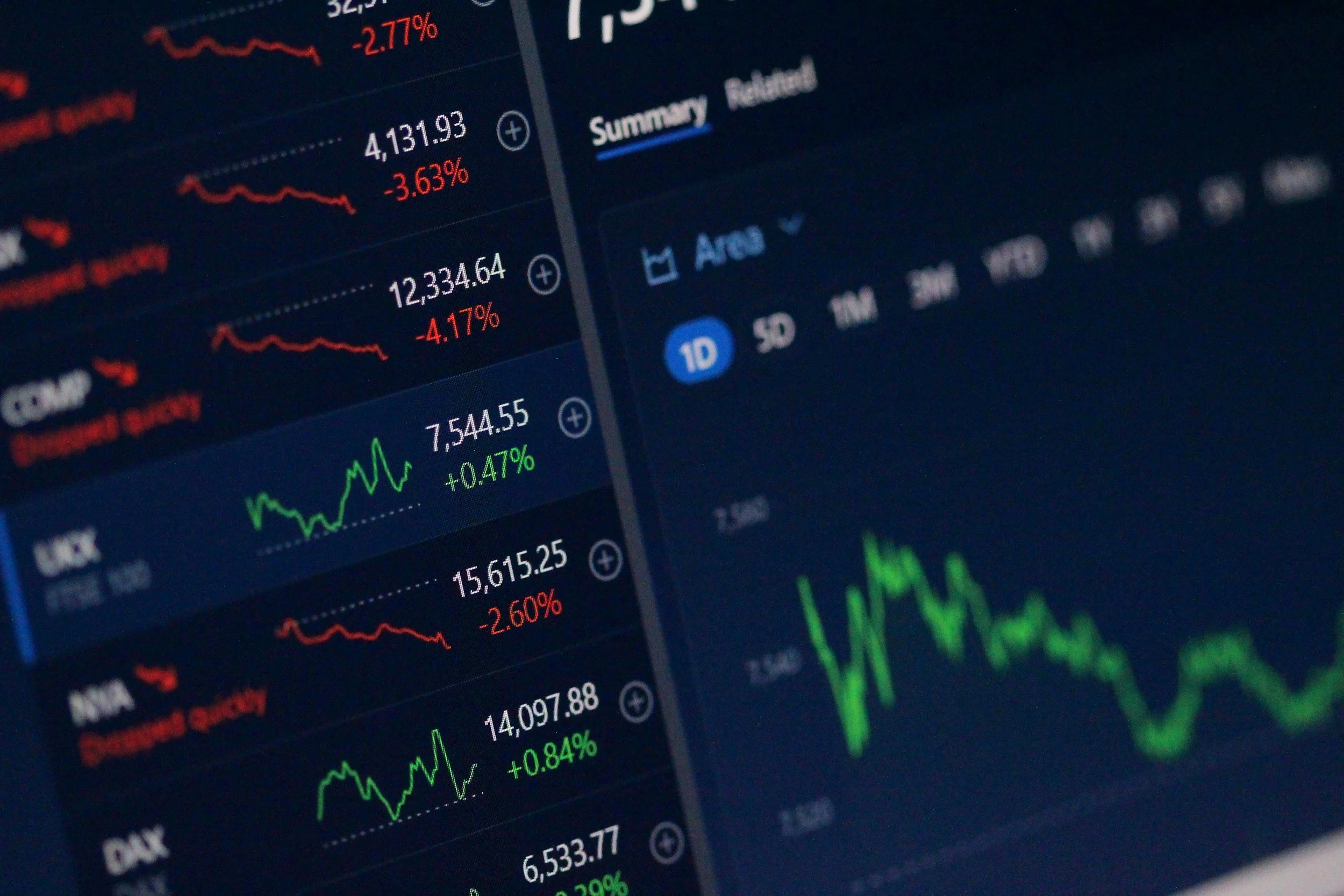
Image Credit: Anne Nygård.
2. Behavioral Psychology and Sentiment (Market Returns)
General physiological and psychological findings
Research on space weather impact on behavioral psychology on terrestrial life indicates that space weather can subtly influence human behavior, mood, and psychophysiology. Studies suggest these phenomena interact with the human body’s autonomic regulation and hormonal systems. Whilst research on this matter with a focus on the financial sector (banking being a subsector within this sector) is fairly new, some general key physiological and psychological findings is as followed:
Psychophysiological shifts:
Variations in solar activity and space weather disturbances correlate with changes in autonomic functions, including altering skin conductance, electromyography (EMG) activity, and breathing patterns.
“Electromyography (EMG) measures the electrical activity of muscles in response to nerve stimulation. It is used to diagnose neuromuscular disorders and evaluate muscle health by monitoring signals at rest, during slight contraction, and forceful contraction.”
Stress and mood:
Scientific literature hypothesizes a link between geomagnetic storm disturbances and stress activation. Researchers – such as the neuroscientist Stanley I. Rapoport from National Institutes of Health (NH), Professor Ladislav Kristoufek from the Czech Technical University, and Professor and Rector Elchin S. Babayev of Baku State University – propose that Earth’s magnetic fluctuations may act as an environmental stressor, potentially triggering the stress responses along the hypothalamic-pituitary-adrenal (HPA) axis which is the human body’s main way of responding to stress. It consists of three organs that each releases hormones to eventually raise cortisol levels in the body.
Additionally, it is argued to potentially being capable of altering hormonal and autonomic systems. The autonomic nervous system is the control network in the human body that regulates involuntary processes like heart rate, digestion, and breathing. It operates automatically without conscious effort, continuously maintaining internal stability (homeostasis) whether the person is awake or asleep.
Behavior and decision marking:
Evidence from behavioral and economic research indicates that severe geomagnetic fluctuations can impair decision-making processes, leading to measurable shifts in collective behaviors (e.g., stock market trading).
The proposed biological mechanisms behind these physiological and psychological finding are:
Magnetoreception: Researchers - like James Close (author associated with Isis Green Ltd., and Oxford-based research and publishing entity) -, hypothesize that humans possess vestiges of a biological compass. Proteins called ‘cryptochromes’, which are light-dependent and influence circadian rhythms, may mediate stress responses when the Earth’s magnetic field is distorted.
Melatonin and neurochemistry: Changes in geomagnetic activity can suppress melatonin secretion and dysregulate the central nervous system, activating inhibitory processes and leading to symptoms like mental fatigue, distractibility, and poor concentration.
Extreme space weather: Radiation from extreme, ancient space weather (i.e., historical and prehistoric solar storms, solar wind fluctuations, and geomagnetic disturbances that occurred centuries or millennia ago), like the Laschamps Excursion/Laschamp Event, may have necessitated behavioral adaptations among early hominids, such as increases reliance on cave shelters and tailored clothing.
“ The Laschamps Excursion (or Laschamp event) was a major, temporary breakdown of Earth's magnetic field that occurred approximately 41.000 years ago, during the Last Glacial Period. Over a span of roughly 300 years, the magnetic field weakened to approximately 10% of its normal strength and temporarily reversed its poles. ”
Market volatility
Beyond physical infrastructure, research indicates that increased geomagnetic activity can influence human mood and risk perception, capable of leading to measurable changes in trading behavior and increased volatility across international stock markets. Space weather impacts the banking sector and market volatility by physically disrupting critical technological infrastructure like satellite timing networks and power grids, and by triggering behavioral mood shifts in investors that alter trading psychology/human decision-making. Space weather triggering satellite anomalies, radio blackouts, and slowing algorithmic trade executions, thus, simultaneously alters trader’s mood and judgement, introduction shifts in international stock returns and risk tolerance.
While it sounds speculative that space weather could alter the behavioral psychology of people within the financial sector, empirical evidence does exist with several peer-reviewed studies within behavioral finance and economic research supporting the theory that space weather impacts investor psychology. The studies connect geomagnetic storms to observable shifts in global stock market returns. The scientific argument relies on established psychological frameworks and quantitative market data.
One of the most famous papers on this topic was published through the Federal Reserve Bank of Atlanta, titled “Playing the Field: Geomagnetic Storms and the Stock Market”, analysed international stock indices. The researchers found that unusually high levels of geomagnetic activity had a statistically significant negative impact on stock returns during the subsequent week. Similarly, a study made in 2019 by Professor Lifang Peng et al. analysed the Ap-Index of Geomagnetic Activity which confirmed a persistent negative correlation between heightened space weather activity and the daily returns of the S&P 500, concluding that space weather influences human behavior enough to alter market outcomes.
“The S&P 500 (Standard & Poor's 500) is a major stock market index tracking the performance of 500 of the largest publicly traded companies in the United States. Representing roughly 80% of the total U.S. stock market's value, it is widely considered the best single gauge of overall U.S. equity market health.”
Psychological mechanisms identified
Behavioral economists point to two primary psychological phenomena to explain these market shifts:
Misattribution of mood:
Psychological research indicates that solar activity, particularly geomagnetic storms, can cause subtle effects on human biology and mood on Earth, creating the “misattribution of mood”. This is something investors within the financial markets can experience. It is experienced as a negative mood caused by the environment but they incorrectly blame the economic outlook, leading them to sell risky assets. Some traders experience heightened stress, anxiety, or in some cases even a mild depression.
Heightened risk aversion:
Studies shows that when human mood is negatively affected by space weather, risk tolerance drops. Investors shift toward safer, riskless assets, creating a temporary downward pressure on equities. Psychologically, individuals may incorrectly attribute this environmental stress to negative economic prospects. This behavioral bias often prompts investors to sell off risky assets, causing the drop in major stock indices and a surge in demand for safe-haven investments.
Space weather impact on technological infrastructure, thus, has cascading effects on the financial sector that surpass its technological systems and infrastructure, by additionally causing psychological affects leading to increased stress, decreased attention spans, and impaired judgment. As explained, this can lead to a broader diversity in trader opinions and heightened caution, ultimately driving up trading volatility.
To prove that this is a psychological phenomenon rather than a pure hardware glitch, researchers looked at market capitalization. Studies on geomagnetic storms and financial markets by, for example, Professor Priya Jindal – faculty member of Maharishi Markandeshwar Institute of Management - consistently find that small-cap stocks are more heavily impacted by space weather than large-cap stocks. The studies argue, that because small-cap stocks are heavily traded by retail, individual investors – who are more prone to emotional decision-making than automated institutional algorithms – the data strongly supports a behavioral explanation.
“Small-cap and large-cap stocks: Market capitalization is calculated by multiplying the current share price by the total number of outstanding shares. Companies below this range are micro-caps, and companies above are mid-caps or large-caps.”
Whether space weather causes direct infrastructure damage, behavioral changes, or both, understanding and tracking space weather is of importance even within the financial sector. By increasing awareness and understanding of space weather within this sector (banking being a subsector within the financial sector) it enables them to take proactive mitigating actions to ensure the resilience of their infrastructure.
Source
Green, Lucie etal. (2016): “Building space weather resilience in the finance sector”. University College London Department of Space and Climate Physics. ResearchGate. DOI: https://doi.org/10.13140/RG.2.2.32458.21443
European Comission (n.d.): “Banking sector and financial stability”. European Semester Thematic Factsheet. https://commission.europa.eu/document/download/16aec668-c86b-47c6-a6d2-062b3a96e515_en?filename=european-semester_thematic-factsheet_banking-sector-financial-stability_en.pdf
Hall, Mary (2025): “The role and impact of the banking sector on the global economy”. Investopedia. https://www.investopedia.com/ask/answers/032315/what-banking-sector.asp
University College London (2016): “Building space weather resilience in the finance sector”. UCL Insights: Research Briefing. University College London. https://www.ucl.ac.uk/public-policy/sites/public_policy_redesign/files/pp_insights_research_briefing_-_space_weather_jul2016.pdf
Krausmann, Elisabeth et al. (2014): ”Space weatrher and financial systems: finding and outlook. An event co-organised by the European Comission’s Joint Research Centre, the UK Civil Contingencies Secretariat and the NOAA Space Weather Prediction Centre 27 June, 2014, London, UK”. JRC Publications. DOI: https://dx.doi.org/10.2788/18855
SANSA et al. (2017): “Economic impact of space weather”. SANSA Policy Brief. SANSA and Republic of South Africa Department of Science & Innovation. https://www.sansa.org.za/wp-content/uploads/2024/09/Economic-Impact-of-Space-Weather-April-2017.pdf
Green, Lucie (2016): “How space weather poses a risk to the finance industry”. The Conversation. https://theconversation.com/how-space-weather-poses-a-risk-to-the-finance-industry-64621
GFZ Helmholtz Centre for Geosciences (n.d.): ”Impact on technologies: impacts of space weather on technologies”. GFZ Helmholtz Centre for Geosciences. https://www.gfz.de/en/spotlights/space-weather/impact-on-technologies
Robotti, Cesare et al. (2003): “Playing the field: Geomagnetic storms and the stock market”. Federal Reserve Bank of Atlanta. Working Paper 2003-5b. DOI: https://dx.doi.org/10.2139/ssrn.375702
Wang, Connie X. et al. (2019): “Transduction of the Geomagnetic Field as Evidenced from alpha-Band Activity in the Human Brain”. eNeuro. 6(2):ENEURO.0483-18.2019. DOI: https://doi.org/10.1523/eneuro.0483-18.2019
National Research Council (2008): “Severe Space Weather Events–Understanding Societal and Economic Impacts: A Workshop Report”. Washington, DC: The National Academies Press. DOI: https://doi.org/10.17226/12643
AON (n.d.): “When the Sun strikes: preparing for the business impact of geomagnetic storms”.
https://aon.co.nz/AonNZ/media/Docs/27555-Geomagnetic-Storms-Insights-Whitepaper_v6-0.pdf
Fernholz, Tim (2022): “The entire global financial system depends on GPs, and it’s shockingly vulnerable to attack”. Tech & Innovation. QUARTZ. https://qz.com/1106064/the-entire-global-financial-system-depends-on-gps-and-its-shockingly-vulnerable-to-attack
The Economic Times (n.d.): “Internet, GPS system to be stopped by solar storm? Here's what researcher has claimed”. The Economic Times. https://economictimes.indiatimes.com/news/international/us/internet-gps-system-to-be-hampered-by-solar-storm-heres-what-researcher-claims/articleshow/105193622.cms?from=mdr
Oughton, Edward et al. (2017): “Quantifying the daily economic impact of extreme space weather due to failure in electricity transmission infrastructure”. AGU. Space Weather Journal Vol. 15, Issue 1. DOI: https://doi.org/10.1002/2016SW001491
Pinhasov, Igal (2024): “Are your GNSS systems ready for solar maximum? Here’s how to strengthen resilience against solar weather”. Technically Speaking Powered by ADTRAN. https://www.blog.adtran.com/en/are-your-gnss-systems-ready-for-solar-maximum
Ruffle, Simon (2016): “Understanding the economic impact of space weather risks”. Strategic RISK. https://www.strategic-risk-global.com/esg-risks/understanding-the-economic-impact-of-space-weather-risks/1419210.article
Lloyd's (n.d.): “Solar storm risk to the North American electric grid”. Lloyd's and the Atmospheric and Environmental Research, Inc. https://assets.lloyds.com/assets/pdf-solar-storm-risk-to-the-north-american-electric-grid/1/pdf-Solar-Storm-Risk-to-the-North-American-Electric-Grid.pdf
Tong, Yin et al. (2026): “Impact of space weather on electricity power grids: A review on economic consequences and National policy”. Frontiers. Astronomy and Space Sciences, Space Physics. https://www.frontiersin.org/journals/astronomy-and-space-sciences/articles/10.3389/fspas.2026.1733091/abstract
Lloyd’s (n.d.): “Extreme space weather, Shining a light on solar storms”. https://assets.lloyds.com/media/dea751c7-e4c5-4b12-9e40-a62971b8ad82/Lloyds_SolarStormsReport_3pp.pdf
Krivelyova, Anna et al. (2003): “Playing the field: Geomagnetic storms and international stock markets”. Working Paper. Federal Reserve Bank of Atlanta, GA. No. 2003-5a. https://www.econstor.eu/bitstream/10419/100979/1/wp2003-05a.pdf
Robotti, Cesare et al. (2003): “Playing the Field: Geomagnetic storms and the stock market”. ResearchGate. SSRN Electronic Journal. DOI: https://doi.org/10.2139/ssrn.375702
Brooks, Crystal (2025): “Effects of solar flares on Forex Market volatility”. Cospar2020. https://www.cospar2020.org/effects-of-solar-flares-on-forex-market-volatility/
Despond, Besile (2018): “Geomagnetic storms and stock market”. Department Physics, ETH Zürich. https://ethz.ch/content/dam/ethz/special-interest/mtec/chair-of-entrepreneurial-risks-dam/documents/dissertation/Despond%20Basile%20geomagnetic%20storms%20and%20the%20stock%20market.pdf
Krausmann, Elisabeth et al. (2013): “Space Weather and Power Grids: Findings and Outlook”. JRC Scientific and policy reports. European Commission. https://www.google.com/url?sa=t&source=web&rct=j&opi=89978449&url=https://publications.jrc.ec.europa.eu/repository/bitstream/JRC86658/lbna26370enn.pdf&ved=2ahUKEwiaqcy73uqUAxXPGRAIHY8LAKcQFnoECBcQAQ&usg=AOvVaw1V6xq0plVqy8t_7Ez-tFLy
European Central Bank (2020): “Guide on the supervisory approach to consolidation in the banking sector”. European Central Bank, Banking Supervision. https://www.bankingsupervision.europa.eu/ecb/pub/pdf/ssm.guideconsolidation2101~fb6f871dc2.en.pdf
Mishkin, Frederic S. et al. (1999): ”Financial consolidation: Dangers and opportunities”. ScienceDirect. Journal of Banking and Finance. Vol. 23 Issue 2-4. Pp. 675-691. DOI: https://doi.org/10.1016/S0378-4266(98)00084-3
Bank for International Settlements (n.d.): “Chapter III: Effects of consolidation on financial risk”. Bank for International Settlements. https://www.bis.org/publ/gten05ch3.pdf
Bank for International Settlements (n.d.): “Chapter VI: the fffects of consolidation on payment and settlement systems”. Bank for International Settlements. https://www.bis.org/publ/gten05ch6.pdf
International Monetary Fund (2001): “Consolidation in the financial sector: summary report”. Bank for International Settlements and International Monetary Fund. ISBN: 92-9131-612-1 https://www.imf.org/external/np/g10/2001/01/eng/pdf/fscssum.pdf
Nicolo, Gianni De et al. (2202): ”Systemic risk and financial consolidation: are they related?”. ScienceDirect. Journal of Banking and Finance. Vol. 26. Issue 5. Pp. 861-880. DOI: https://doi.org/10.1016/S0378-4266(02)00211-X
Kam, Warren, Wai Tong (2025): “Solar influences on financial markets: toward smarter investment decisions across indices”. SSRN. DOI: https://dx.doi.org/10.2139/ssrn.5171811
Robotti, Cesare et al. (2003): “Playing the field: geomagnetic storms and the stock market”. Federal Reserve Bank of Atlanta Working Paper. No. 2003-5b. SSRN. DOI: https://dx.doi.org/10.2139/ssrn.375702
Lifang, Peng et al. (2019): ”Effect of Ap-Index of geomagnetic activity on S&P 500 stock market return”. WILEY Online Library. Journal: Advances in Astronomy. DOI: https://doi.org/10.1155/2019/2748062
Arshadigbal (n.d.): ”Geomagnetic storms and stock market impact”. Scribd.https://www.scribd.com/document/825821467/Week-13-14
Thi Hao Hong, Nguyen et al. (2023): “Does weather anomaly still affect the emerging stock market under the unexpected event? New evidence from the COVID-19 pandemic”. National Library of Medicine, National Center for Biotechnology Information. DOI: https://doi.org/10.1016/j.heliyon.2023.e18665
Jindal, Priya (2017): “Geomagnetic storm and it’s effects on financial Mar Ket”. Academia. https://www.academia.edu/69864487/Geomagnetic_Storm_and_It_s_Effects_on_Financial_Mar_Ket
Garvey, Raven et al. (2025): “Weird space weather seems to have influenced human behavior on Earth 41,000 years ago – our unusual scientific collaboration explores how”. Space.com. https://www.space.com/astronomy/earth/weird-space-weather-seems-to-have-influenced-human-behavior-on-earth-41-000-years-ago-our-unusual-scientific-collaboration-explores-how
Close, James (2012): “Are stress responses to geomagnetic storms mediated by the cryptochrome compass system?”. National Library of Medicine: National Center for Biotechnology Information. 279(1736. Pp. 2081-2090. DOI: https://doi.org/10.1098/rspb.2012.0324
Hanzelka, Michael et al. (2021): ”Human psychophysiology is influenced by low-level magnetic fields: solar activity as the cause”. MDPI. Journal of Atmosphere. Special Issue: The Effect of Helio-Geomagnetic Activity in the Geo-Environment and by Extension to Human Health. Vol. 12, Issue 12. DOI: https://doi.org/10.3390/atmos12121600
Rapoport, Stanley I. et al. (1998): ”Magnetic storms as a stress factor”. National Library of Medicine: National Center for Biotechnology Information. Biofizika. 43(4):632-9. PMID: 9783070. https://pubmed.ncbi.nlm.nih.gov/9783070/
Kristoufek, Ladislav (2018): ”Does solar activity affect human happiness?”. ScineceDirect. Physica A: Statistical Mechanics and its Applications. Vol. 493. Pp. 47-53. DOI: https://doi.org/10.1016/j.physa.2017.10.031
Babayev, Elchin S. et al. (2007): “Effects of geomagnetic activity variations on the physiological and psychological state of functionally healthy humans: Some results of Azerbaijani studies”. ScienceDirect. Journal of Advances in Space Research. Vol. 40, Issue 12. Pp. 1941-1951. DOI: https://doi.org/10.1016/j.asr.2007.02.099
Zakharov, Ivan et al. (2001): “The effect of solar activity on ill and healthy people under conditions of neurous and emotional stresses”. ResearchGate. Journal of Adnaces in Space Research 2 8(4):685-9. DOI:https://doi.org/10.1016/S0273-1177(01)00379-9
Tracy, Samantha M. et al. (2022): ” Associations between solar and geomagnetic activity and peripheral white blood cells in the Normative Aging Study”. ScienceDirect. Journal of Environmental Research. Vol. 204, Part B. DOI: https://doi.org/10.1016/j.envres.2021.112066
