
C H A P T E R
N ° 45
Maritime Resilience (Part 2)
Space weather impose safety risks and operational challenges to the maritime sector. In previous articles focused on the maritime sector, Hoplon provided an overview of technologies that can get affected by space weather and the system-of-systems designs effect on the maritime sector.
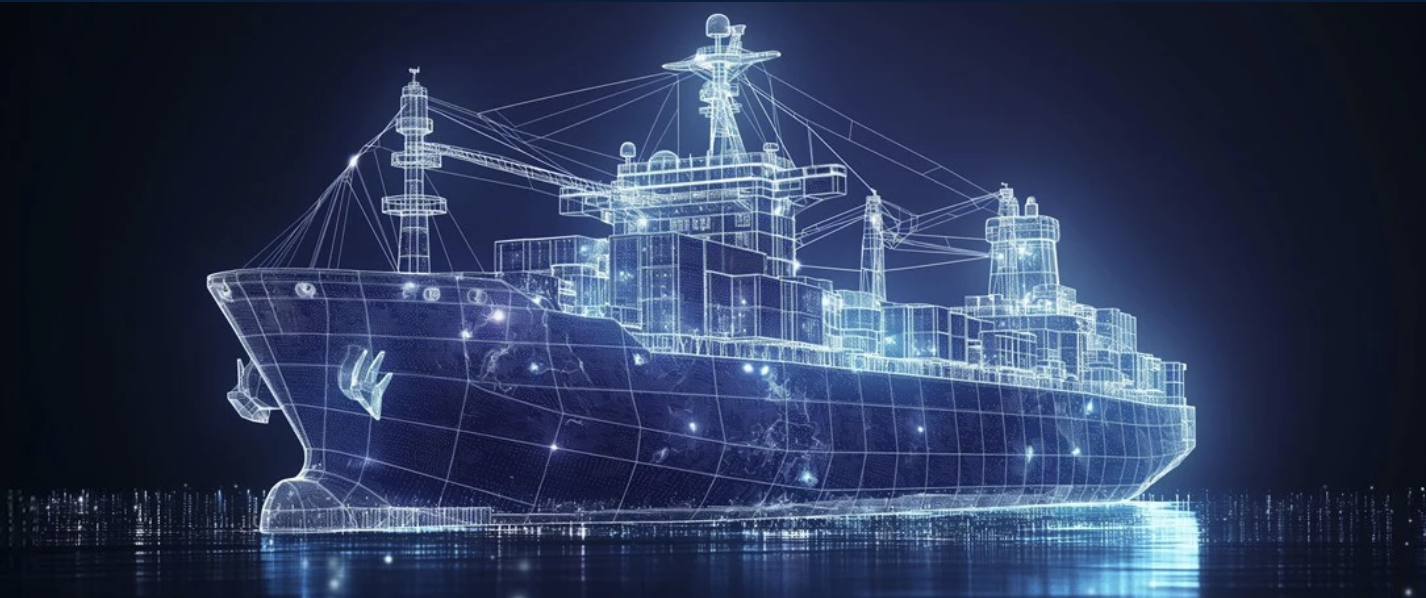
Image Credit: Blue Maritime Cluster - Global Centre of Expertise Norway.
C H A P T E R N ° 36-38 focused on Maritime Ports, exploring maritime ports as a critical infrastructure (CI), the “system of systems” design, and the anticipated ‘mega disaster’-scenario. It looked at the connection between seaports and the energy sector and space infrastructure, and discussed the notion of cascading risks, focused on the combination of space weather, the ‘system of systems’ design, and maritime ports. Lastly, space weather resilience and its role in overall maritime resilience was consider.
C H A P T E R N ° 39The Ocean, looked closer at the intricate relation between space weather and the ocean, and potential risks and vulnerabilities. Here, direct and indirect effects were explored, looking at things such as the relation between Earth’s atmosphere and the ocean, and how space weather may influence this relation. C H A P T E R N ° 40-41 focused onSubmarines and discussed the relation between space weather and submarines, looking closer at things such as the interdependencies between critical infrastructure and the risks and vulnerabilities they pose to submarines. C H A P T E R N ° 42-43 focused onAutonomous Maritime Vessels, exploring the concept of autonomous maritime vessels and the different classification degrees. Moreover, they examined how space weather impacts the technology onboard autonomous maritime vessels, and subsequently consider the potential consequences these effects may have on both safety and overall operational efficiency at sea.
Today’s article will be part 2, and thus the last, of 2 articles focused on space weather and maritime resilience. Combined the articles look closer at the key reasons for ensuring space weather resilience in the maritime sector and examples of how the effects can be mitigated.
Submarines
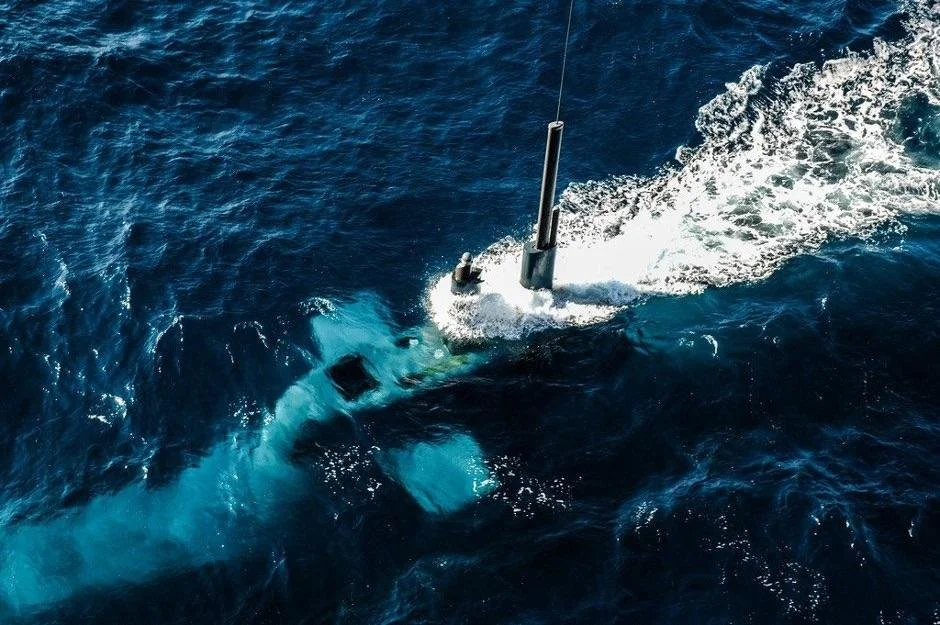
Image Credit: NavalPost: U-212 Class Submarine.
Space weather poses significant indirect threats to submarines via disruption of critical electronic systems (Global Positioning System (GPS), communication satellites, cables) that their assets rely on, and other critical infrastructure such as the energy sector. A loss or disruption to navigation and communication can impact coordination and tracking, and force submarines to rely on internal systems, or be forced to surface for clear signals, making them vulnerable to potential counterparts. Furthermore, their fundamental need for consistent power sources, whether nuclear fuel or diesel, connects them directly to the energy sector, which comes with its own set of risks and vulnerabilities, consequently impacting range, stealth, and operational capability.
Space weather pose risks to data transfer, with the potential of affecting naval operations. Solar activities such as solar flares and Coronal Mass Ejections (CMEs) can cause severe impact leading to loss of navigation, communication, and surveillance, consequently reducing situational awareness and communication reliability. In addition, the impact of space weather on the energy sector could lead to cascading effects within the maritime sector, leading to things such as mission failure, strategic disadvantageous and increased safety risks for submarines.
Mitigation measure for submarines include:
Redundancy: multiple navigation methods and backup communication systems should be used to reduce reliance on single points of failure.
Internal systems: When the Global Positioning System (GPS) is down, change to inertial navigation systems (INS). A Inertial navigation system (INS) is a self-contained navigation aids that uses gyroscopes and accelerometers to track an object’s position, orientation, and velocity relative to a known starting point without needing external signals.
Deep diving and awareness: Submarines can dive below the thermocline/pycnocline, well below where surface storm waves and many atmospheric effects penetrate, providing stability. However, the influence of space weather can still be felt, thus, requiring crews to be aware.
Space weather forecasting and warning system: Forecasting and warning systems focusing on space weather can provide accurate forecasts helping naval operators plan missions and take precautions, improving "e-seaworthiness". "E-seaworthiness," also referred to as cyber-seaworthiness, is an evolving concept in maritime law that extends the traditional definition of a seaworthy ship to include the security of its electronic, digital, and automated systems. It reflects the understanding that; a vessel with inadequate cybersecurity measures is not "reasonably fit" for a modern voyage, as cyber threats can lead to accidents, operational disruptions, and environmental hazards.
Shielding and design: Awareness and consideration of space weather should be present when designing new and modern system to handle some fluctuations in order to minimize the effects.
Emerging risks for modern maritime vessels
In recent years, the interest for fully autonomous maritime vessels have increased. The sector is investing in automation to address critical operational, safety, and environmental challenges, aiming to transform shipping into a more efficient, sustainable, and safer industry. However, the understanding of weather interferences from space on autonomous technology is still sparse. Autonomous or highly automated vessels depend heavily on satellite signals. A failure in these systems can lead to uncommanded maneuvers or total loss of navigation control. Some of the key effects caused by space weather on autonomous maritime vessels are: navigation and positioning failures, communication loss, and sensor interferences, increasing overall safety risks.
Mitigation measure for modern maritime vessels include:
Resilient technology: Using multi-constellation Global Navigation Satellite Systems (GNSS) (e.g., GPS, Galileo, GLONASS) and L-band connectivity, which is more stable during, solar activity.
Increased autonomy: Developing Artificial Intelligence (AI) that can operate in "fail-safe" or "dead reckoning" mode, allowing the vessels to safely pause or navigate to a safe location without real-time satellite input.
Space weather monitoring: Integrating space weather forecasts into operational planning to avoid high-risk periods.
Additional technologies effected by space weather
In addition to the effects on satellites, other technologies effected by space weather are for example:
Sea cables:
Extreme solar events causing space weather events like geomagnetic storms can create electric currents (i.e., Geomagnetically Induced Currents (GICs)) in the ocean, inducing voltages in long conductive structures like submarine internet cables posing a threat to internet infrastructure.
Mitigation measures for sea cables include:
Redundancy: Modern submarine cables should be built with redundant power feed equipment (PFE) at both ends to absorb voltage fluctuations.
Design standards: Modern subsea cable systems and design are generally considered safe from large solar storms. Older systems should, therefore, get renewed to the current standard.
Monitoring: Proactive monitoring to detect geomagnetic disturbances and power management during solar storms can protect cable infrastructure.
Compass and magnetic sensors:
Strong geomagnetic storms induce Geomagnetically Induced Currents (GICs)) that can affect magnetic compasses and sensitive electronic equipment on maritime vessels.
Mitigation measures for compass and magnetic sensor errors include:
Warning systems: The implementation of a space weather forecasting and warning system. These systems provide alerts to notify operators of impending magnetic storms that might affect sensitive equipment.
Ground observatories: Networks of magnetometers, such as those at the British Geological Survey (BGS), to continually monitor the magnetic field to mitigate impacts on infrastructure.
Advanced sensors: Emerging technologies like quantum sensors (nitrogen-vacancy centers in diamonds) are being developed to provide higher sensitivity to minute changes, aiding in better detection of these fluctuations.
Deep ocean sensors, and sonar and acoustic effects:
More significant space weather can create geomagnetic currents affecting deep ocean sensors. Deep ocean sensors are critical sensors, placed at the ocean bottom to for example detect tsunamis and transmit data to surface buoys, which then use satellite communication, leaving the transmission path vulnerable to space weather interference. Furthermore, while it is not a direct effects of space weather, climate change which is linked to solar cycles alters ocean conditions (temperature, salinity etc.), affecting sound propagation, making it harder or easier to detect submarines.
Mitigation measures for deep ocean sensor, sonar and acoustic errors include:
Ocean Networks Canada observatory risks: Ocean Networks Canada, with over 12,000 sensors, monitors the risks of space weather impact on deep ocean sensors to ensure the accuracy of oceanographic data, particularly from Acoustic Doppler Current Profilers (ADCP).
Protection measures: Similar to satellites, deep-sea instruments can be designed with shielding or redundant systems to withstand electromagnetic disturbances.
Future outlook

Image Credit: Conception Etude Realisation Logistique.
Space weather awareness is getting increasingly important, due to society’s ever-growing reliance on technology. The dependency on, for example, digital technology creates a net type of “e-seaworthiness” risk, requiring operators to have backup navigation methods (e.g., manuals, inertial, or e-Loran systems). Although different mitigation strategies can be used to create space weather resilience, it is important to acknowledge that current engineering-based mitigation measures provide no guarantee of full shielding from this natural hazard. The highest currently obtainable level of space weather resilience, therefore, demands a mitigation strategy combining engineering-based and non-engineering-based (i.e., non-structural) mitigation measures. This is applicable to the maritime sector as well as any other critical national and global infrastructure.
Space weather forecasting and warning systems are a good example of this. Space weather forecasting and warning systems are an important part of the mitigation strategy for the maritime sector, like any other critical infrastructure. Agencies like the Met Office, and NOAA provide forecasts allowing for pre-emptive action to protect sensitive equipment and adjust routes, particularly for maritime vessels in high latitude (Arctic or Antarctic region). Additionally, space weather services are being developed to provide early warnings to maritime users about potential vulnerabilities in their radio and navigation systems. Overall, research on space weather forecasting and warning systems focuses on improving forecasting models and developing mitigation strategies to protect critical maritime infrastructure from the effects of space weather. Space weather forecasting and warning systems act as a type of “back-up”/protective system for modern technological infrastructure, allowing operators to transition to safer operational modes before solar events cause damage. They ensure that if the already established engineering-based mitigation measure are estimated to not be able to withstand the incoming space weather impact, other steps can be taken to either minimize or prepare for potential impact. By providing early warnings, these systems – like other non-structural mitigation measures -, thus, enable proactive mitigation to prevent significant impact, rather than relying solely on the hardening of infrastructure alone.
Similar to other critical infrastructures, maritime resilience is, thus, obtained through a combination of many different mitigation measures, wherefrom only a few have been introduced in this and the previous chapter: C H A P T E R N ° 44Maritime Resilience (Part 1) and C H A P T E R N ° 45Maritime Resilience (Part 2).
Source
Fiori, Robyn (2022): “Development of space weather services to inform maritime users of space weather events affecting high frequency radio communication”. 44th COSPAR Scientific Assembly. Held 16-24 July, 2022. Volume 44. Online at https://www.cosparathens2022.org/. Abstract PSW.1-0001-22. Pp. 3435.
Grant, Alan; Shaw, George (2012): “The effect of space weather on maritime aids-to-navigation service provision”. Annual of Navigation. Vol. 19(1). DOI: https://doi.org/10.2478/v10367-012-0005-9?urlappend=%3Futm_source%3Dresearchgate
Xue Dabin et al. (2024): “Space weather effects on transportation systems: A review of current understanding and future outlook”. Advancing Earth and Space Science (AGU). Volume 22, Issue 12. DOI: https://doi.org/10.1029/2024SW004055
Ishii, Mamoru et al. (2024): “Space weather impact on radio communication and navigation”. ELSEVIER. Advances in Space Research. DOI: https://doi.org/10.1016/j.asr.2024.01.043
NOAA (n.d.): “HF Radio communication”. https://www.swpc.noaa.gov/impacts/hf-radio-communications#:~:text=Space%20weather%20can%20impact%20HF%20radio%20communication,enhanced%20D%2Dlayer%20that%20blocks%20HF%20radio%20communication.
Danish Maritime Authority (n.d.): “AIS data”. https://www.dma.dk/safety-at-sea/navigational-information/ais-data
Hansen, Nicholas (2023): “Situational Awareness for autonomous marine vessels”. Technical University of Denmark (DTU). https://backend.orbit.dtu.dk/ws/portalfiles/portal/338331238/PhD_thesis_260_sider_-_76_farvede.pdf
WindWard (n.d.): “Automatic Identification Systems (AIS)”. https://windward.ai/glossary/what-is-automatic-identification-systems-ais/
SKYFI (n.d.): “Vessel tracking: keeping ships on course with modern technology”. https://skyfi.com/en/blog/vessel-tracking-keeping-ships
Maritime Fairtrade (2024): “Navigating safety: importance of maritime vessel tracking systems”. https://maritimefairtrade.org/navigating-safety-importance-of-marine-vessel-tracking-systems/
Maljković, Mislav et al. (2022): ”Situational Awareness from the master point of view and importance of factors that influence it”. ResearchGate. Conference ICTS 2022. https://www.researchgate.net/publication/361735423_SITUATIONAL_AWARENES_FROM_THE_MASTER_POINT_OF_VIEW_AND_IMPORTANCE_OF_FACTORS_THAT_INFLUENCE_IT
Lloyd’s (2025): “Lloyd’s highlights risk of extreme space weather as latest scenario reveals potential global economic loss of $2.4trn”. https://www.lloyds.com/insights/media-centre/press-releases/extreme-space-weather-scenario
